Passivated Emitter and Rear Cell on P-type monocrystalline silicon, the workhorse technology of 2016–2023.
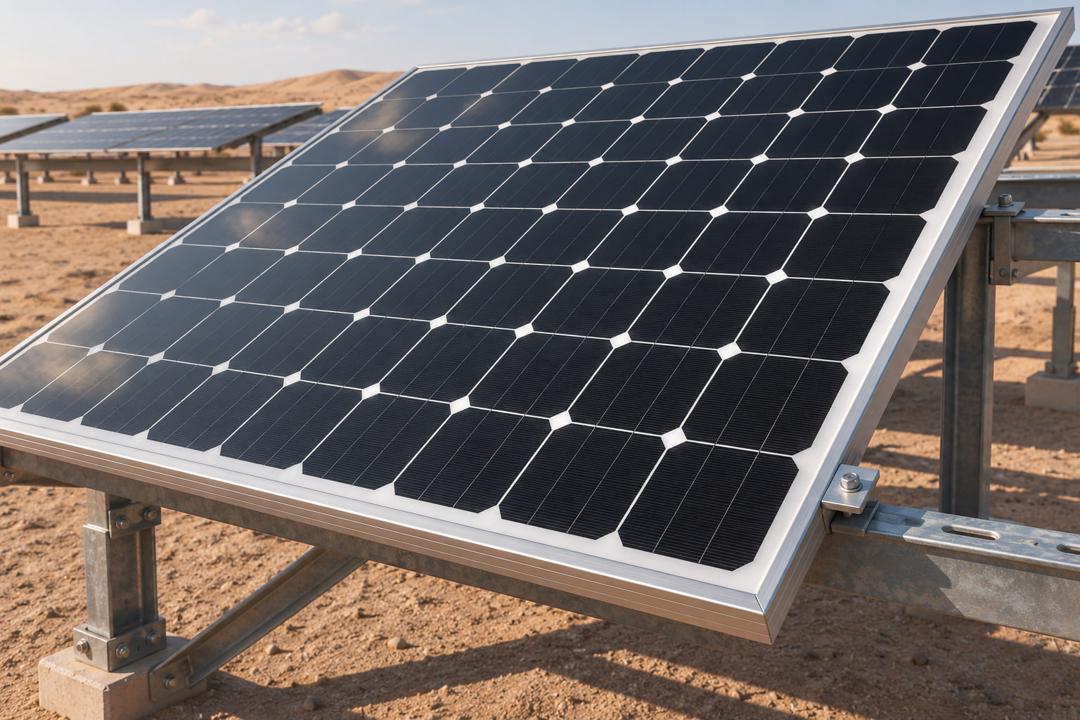
PERC (Passivated Emitter and Rear Cell) adds a dielectric passivation layer (typically aluminium oxide capped with silicon nitride) to the rear of a conventional P-type monocrystalline cell. Laser openings in this layer let the aluminium back contact touch the silicon only at small points, which cuts rear-surface recombination and reflects unabsorbed long-wavelength light back into the wafer for a second pass.
The result was a jump in mass-production cell efficiency from roughly 20 % to 23 %, at very low additional cost on existing lines. For several years mono PERC modules of 400–550 W were the default choice for rooftops and utility plants alike.
PERC's limits are now well understood: practical cell efficiency tops out near 24 %, boron-doped P-type wafers suffer light- and elevated-temperature-induced degradation (LID/LeTID), and the temperature coefficient of about −0.34 to −0.35 %/°C costs yield in hot climates such as the Gulf. Bifacial PERC exists, but bifaciality is only around 70 %.
Since 2023 the major Tier-1 manufacturers have shifted capacity to N-type TOPCon and back-contact cells. PERC modules remain available, often at attractive prices, and are still a sound option for budget-driven projects where space is not a constraint.
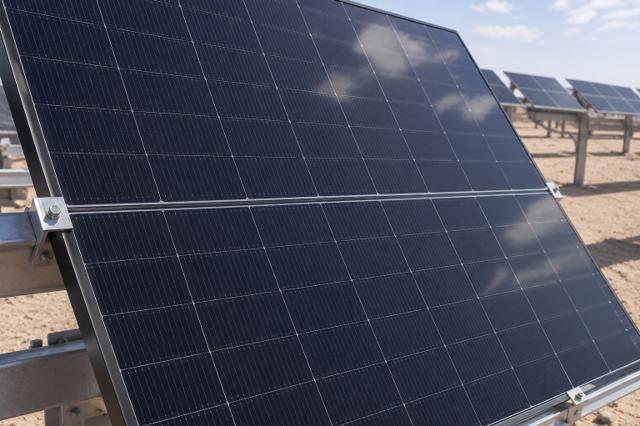
Tunnel Oxide Passivated Contact cells on N-type wafers: today's mainstream high-efficiency, high-bifaciality technology.
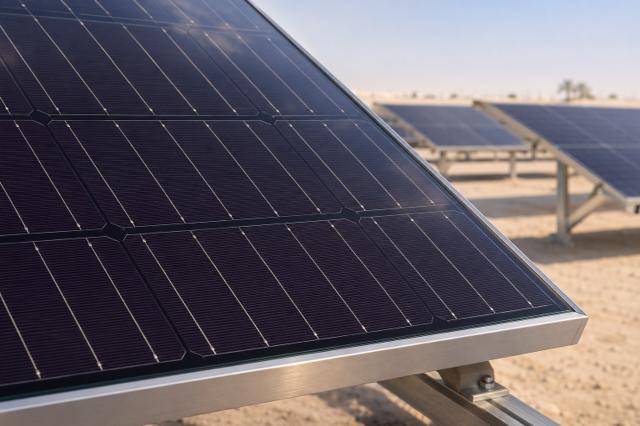
Crystalline N-type wafer sandwiched between thin amorphous-silicon layers, with the best temperature coefficient among silicon technologies.
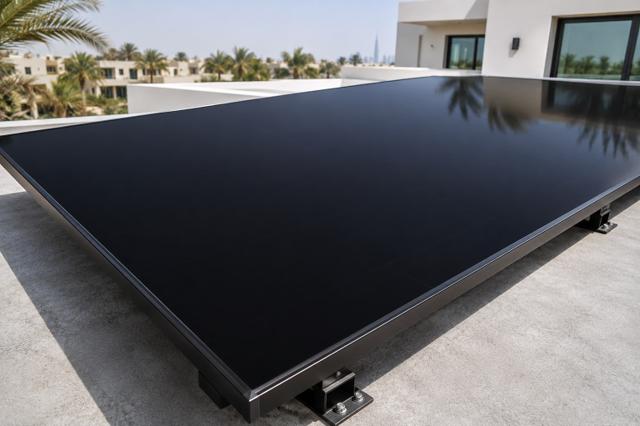
All electrical contacts moved to the rear of the cell. No front busbars, more light captured and the highest module efficiencies on the market.
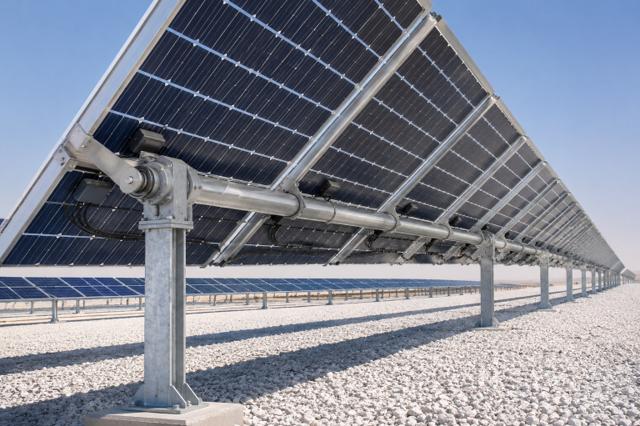
Modules that also convert light reaching their rear side, adding 5–25 % energy depending on ground albedo and mounting height.
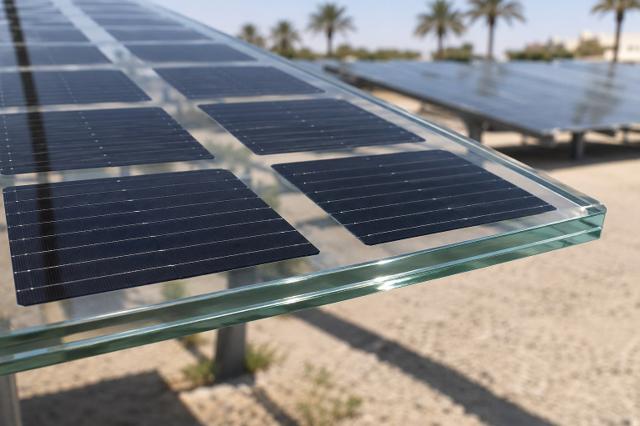
Cells laminated between two sheets of tempered glass for higher durability, lower degradation and 30-year warranties.
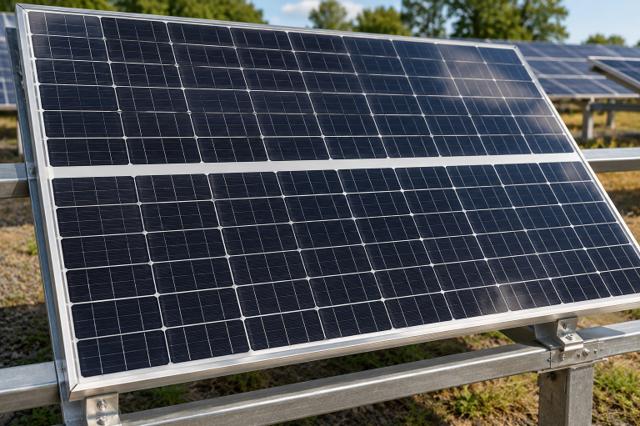
Cells laser-cut in half to halve current per string, reduce resistive losses and improve shade tolerance.
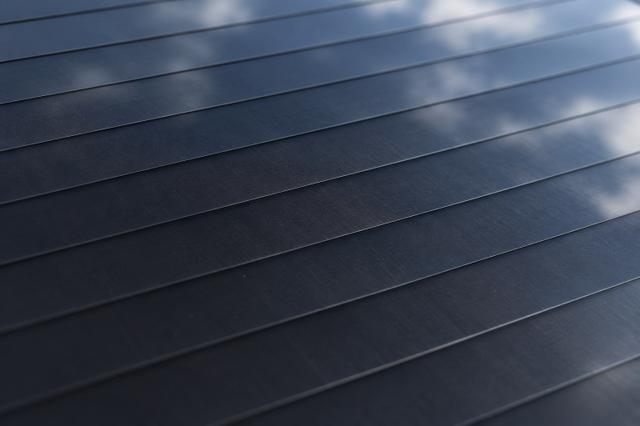
Cell strips overlapped like roof shingles and bonded with conductive adhesive, leaving no gaps or ribbons and a high active area.
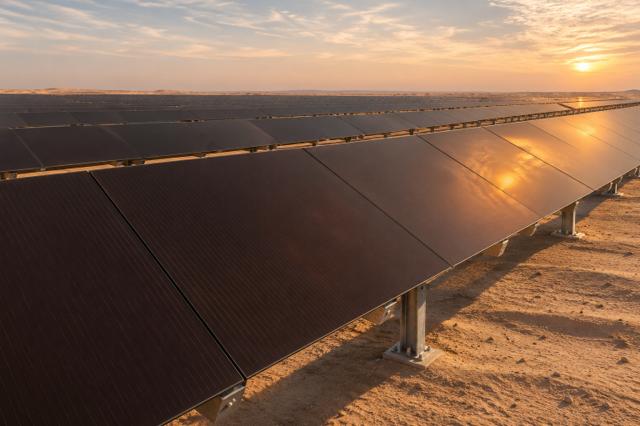
Semiconductor layers a few micrometers thick deposited on glass. Excellent heat and diffuse-light behavior, lower efficiency per area.
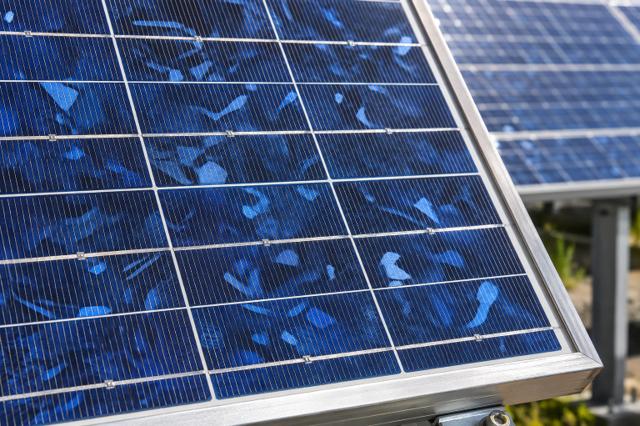
Blue, multi-grain silicon modules that dominated until about 2018, now discontinued by Tier-1 makers.
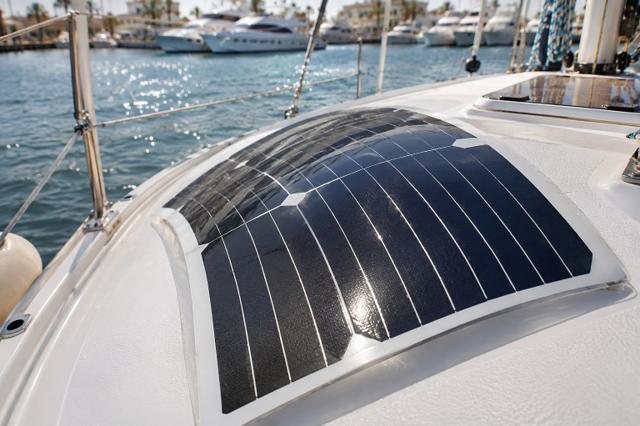
Glass-free laminates for roofs with low load capacity, curved surfaces, vehicles and marine use.
